

You’ve decided Belize is the place. Maybe it’s a beachfront home in Placencia, a condo overlooking the mountains, or a piece of land you’ll build on down the road. The next question is almost always the same: how do I actually pay for this?
Here’s a breakdown of how foreigners actually finance property in Belize, with real terms, real lenders, and real sources so you can go into the process with your eyes open.
Unlike the U.S., Canada, or the U.K., Belize doesn’t have a mature, standardized mortgage market for foreign buyers. That surprises a lot of people — and it stops some of them from even looking further. But it shouldn’t. Financing in Belize just works differently, and once you understand the landscape, there are more real options than most buyers expect.
1. CASH- Still the Most Common Route
Most international buyers in Belize pay cash. It’s not just a preference — it’s often the practical default, since traditional bank mortgages for non-residents are limited. Cash deals also close faster (often in 30–60 days) and give buyers real negotiating leverage on price, since sellers don’t have to worry about financing falling through.
If you’re comparing Belize to a market where financing is the norm, this can feel unusual at first. In practice, many buyers fund the purchase by tapping equity from a property back home rather than trying to finance the Belize purchase directly (more on that below).
2. Seller (Owner) Financing
This is the most commonly used financing structure for foreign buyers who don’t want to pay 100% cash upfront. The seller essentially acts as the bank: you make a down payment, then pay the balance over an agreed term directly to them.
Typical terms reported across Belize real estate sources:
Down payment: 25%–40% of the purchase price (higher than the 10–20% many buyers are used to elsewhere, since the seller is carrying the risk)
Term length: Commonly 5–10 years
Interest rate: Roughly 5%–10%, depending on the seller and the deal
Because it’s a private agreement between buyer and seller, terms are negotiable — and the financing agreement is filed with the Lands Department alongside the transfer and deed documents to protect both parties. Title transfers once the final payment is made.
3. Local Belize Bank Financing
Domestic banks — Atlantic Bank, Heritage Bank, and Belize Bank serve primarily residents and citizens. Under Belize’s exchange control rules, domestic banks generally cannot extend credit to non-residents without prior approval from the Central Bank of Belize, so a standard mortgage product for a foreign buyer isn’t something these banks offer off the shelf.
In practice, this is why non-resident buyers who want a Belize-based bank loan generally go through the specialized international divisions of these same banking groups — built specifically to serve non-residents — rather than the domestic retail side. That route is covered next.
4.International & Offshore Bank Financing
This is where things have genuinely improved for foreign buyers in recent years, and it’s worth a closer look if you don’t want to pay all-cash or negotiate seller terms.
Belize Bank International operates as a separate division from the domestic bank and is built specifically to serve non-resident, international clients — including real estate financing for residential purchases, land, construction, and refinancing. According to the bank’s own team, the typical structure is a 60/40 loan-to-value split, meaning buyers should expect to put down around 40%, with loan terms running up to roughly 15 years. Approval is driven more by overall financial picture — income, liquidity, and cash flow — than by a credit score alone, and accounts can be opened remotely.
Caye International Bank, an offshore bank headquartered in Belize, also offers real estate and construction loans to non-Belizean borrowers, including condo financing, residential mortgages, and construction loans, available in multiple currencies. Offshore lenders like this typically charge higher rates than domestic ones and require solid documentation (proof of income, bank statements, sometimes two years of financials for corporate borrowers), but they’re specifically structured for the international buyer who local banks often turn away.
5. Home Equity (HELOC) from Your Home Country
A popular strategy, especially among U.S. and Canadian buyers: rather than financing in Belize at all, use a home equity line of credit (HELOC) or home equity loan against a property you already own back home, then bring the funds to Belize as a cash buyer. This sidesteps Belize’s more conservative lending terms entirely and lets you move as a cash-ready buyer, which is often the strongest negotiating position in this market. As with any cross-border financial move, it’s worth talking to your financial advisor or accountant about the tax implications before you go this route.
So, Which Option Is Right for You?
There’s no single “best” path — it depends on your timeline, your liquidity, and how the seller is set up to sell. A quick way to think about it:
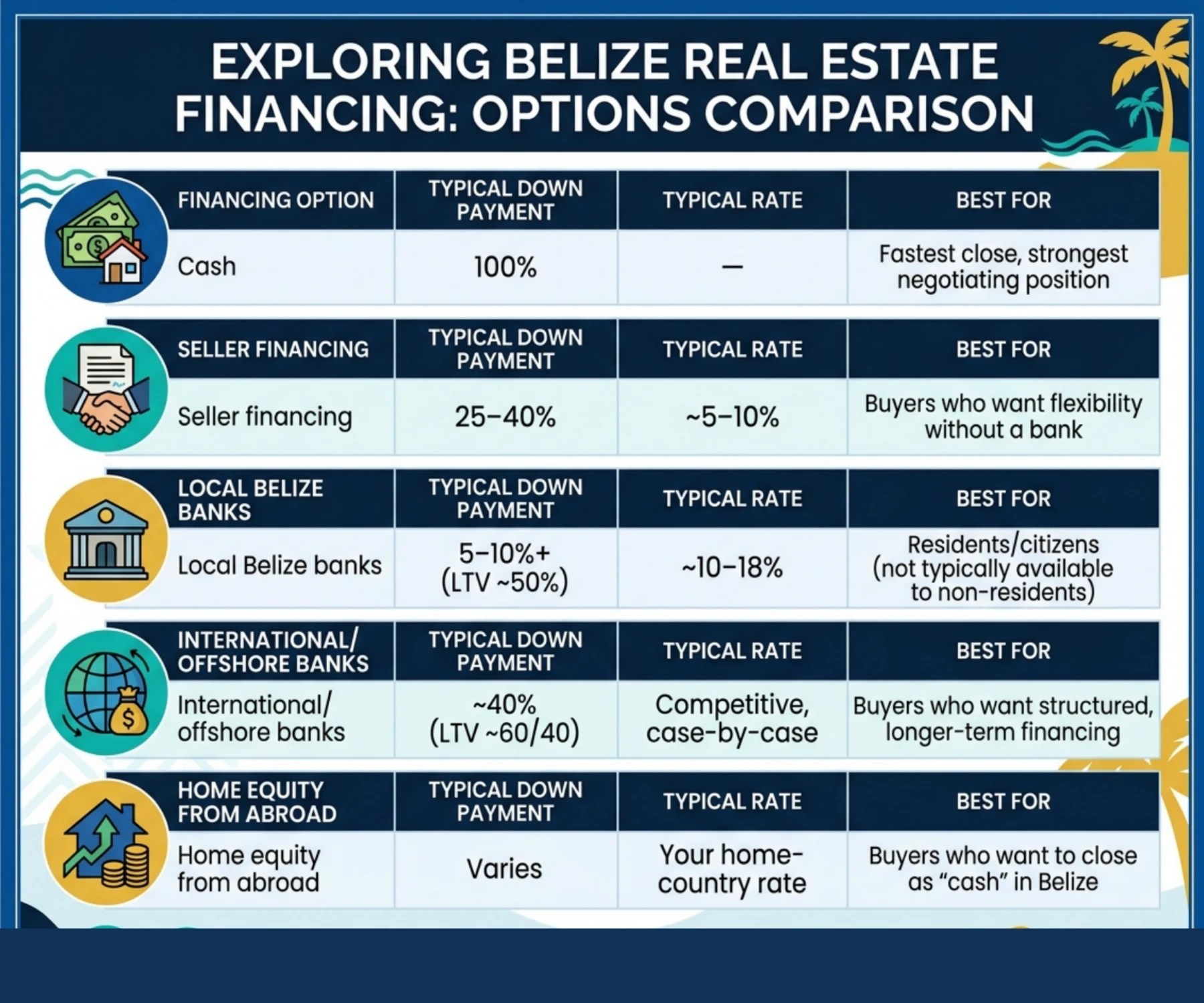
Talk to Someone Who Knows the Market
Every financing route in Belize comes down to the specifics of the deal — the seller’s flexibility, the property itself, and your own financial picture. Our team at Prime Belize works with buyers through exactly these conversations every day, and we can point you toward the right lender or seller-financing structure for your situation. Get in touch to talk through your options before you make an offer.
This article is for general informational purposes and isn’t financial or legal advice. Loan terms, rates, and eligibility change and vary by lender — confirm current terms directly with the bank or seller before making financial decisions.


